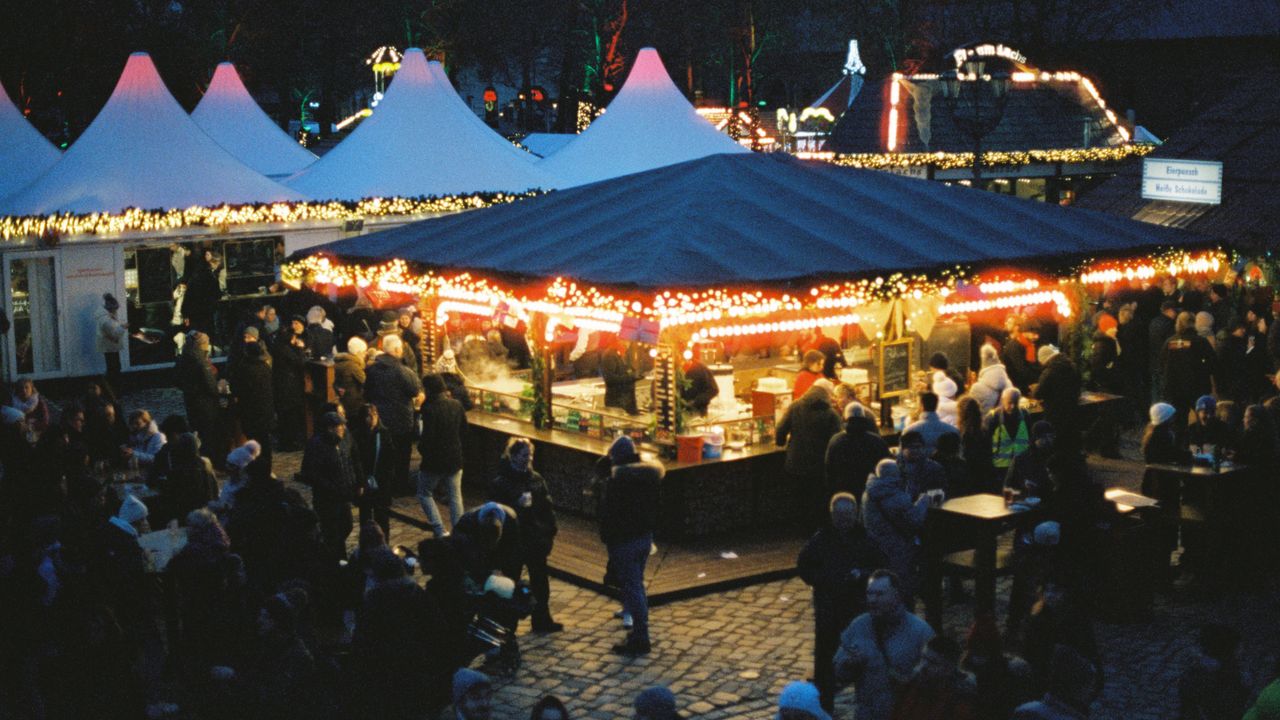
From the end of November until 23 December, almost every German town sets up a Christmas market. Wooden stalls fill the old squares, the air smells of cinnamon and roasted almonds, and choirs sing in front of the town hall. Here is how to enjoy them like a local.
The most famous markets
- Nuremberg Christkindlesmarkt, opened every year by the Christmas Angel
- Dresden Striezelmarkt, held since 1434 and the oldest in Germany
- Rothenburg ob der Tauber, a medieval town that looks like a Christmas card
- Cologne, with several markets near the cathedral
- Munich, Stuttgart and Esslingen with its medieval market
What to eat and drink
Start with a cup of Glühwein, hot spiced red wine; children and drivers can choose Kinderpunsch without alcohol. You pay a small deposit for the mug and either return it or keep it as a souvenir. Try Nuremberg sausages, potato pancakes with apple sauce, roasted chestnuts and Lebkuchen, soft gingerbread with nuts and spices. In Dresden, the famous Christstollen is a must.
What to buy
Look for wooden nutcrackers and smoking men from the Ore Mountains, straw stars, glass baubles, candles and hand-carved nativity figures. Prices are higher than in shops, but many pieces are made by local craftsmen.
Tips for your visit
- Visit on weekdays and in the late afternoon, when the lights come on but the crowds are smaller
- Dress warmly: temperatures are often around 0°C
- Bring cash; many stalls do not take cards
- Most markets close on 23 December, some open again after Christmas
Our Christmas Markets tour combines Nuremberg, Rothenburg, Bamberg and Dresden in six days, with central hotels close to the markets.